As online commerce continues to grow, businesses selling age-restricted products face increasing pressure to verify customer identities accurately while maintaining a seamless checkout experience.
Traditional verification processes often create friction for users, leading to abandonment, while weaker solutions can leave businesses vulnerable to fraud and regulatory risk.
Problem Statement
How might we create a secure and efficient mobile ID verification experience that accurately detects fraudulent IDs while minimizing friction for legitimate users?
The solution needed to:
Verify identities quickly and accurately
Detect counterfeit and fraudulent IDs
Support a diverse range of users and devices
Reduce user drop-off during verification
Integrate seamlessly into existing e-commerce workflows
My Role
Lead Product Designer & UX Researcher
I was responsible for the entire product design lifecycle, including:
Product strategy
UX research
Competitive analysis
Information architecture
Wireframing
Prototyping
Visual design
Design system implementation
Cross-functional collaboration
Additionally, without a dedicated Product Owner, I took ownership of the Product Requirements Document (PRD), helping define features, prioritise scope, and align stakeholders around project goals.
Research & Discovery
Understanding the Market
To better understand user expectations and industry standards, I conducted a comprehensive review of existing mobile identity verification solutions.
The objective was to identify:
Common verification patterns
Areas of user friction
Accessibility considerations
Opportunities for differentiation
Technical limitations across mobile devices
Competitive Analysis
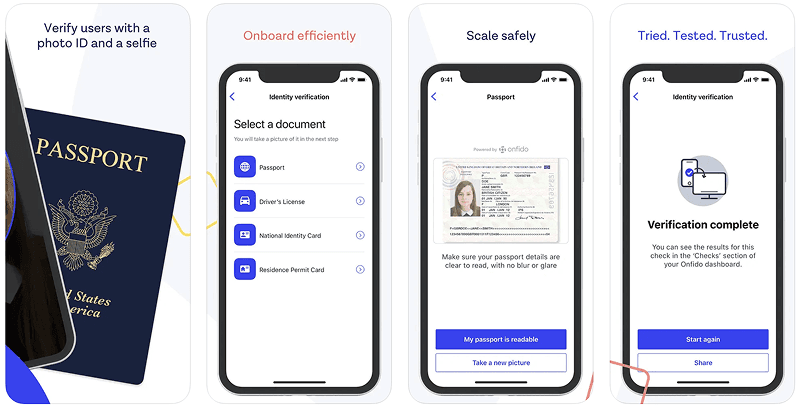
Onfido
A market leader in identity verification with a clean, security-focused experience.
Key Learnings
Clear instructions reduce user confusion
Strategic use of white space improves readability
Security-focused visual language builds trust
Jumio

An established identity verification platform serving both web and mobile experiences.
Key Learnings
Strong onboarding and guidance patterns
Simplified user flows reduce cognitive load
Some visual patterns felt dated and less approachable
Trulioo
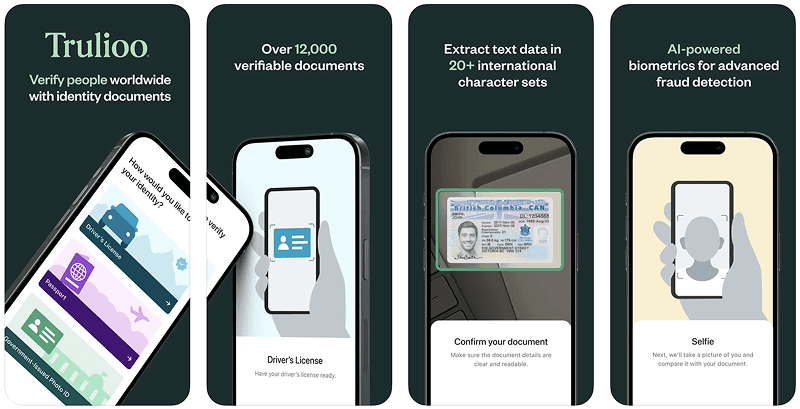
A global identity verification provider supporting international verification requirements.
Key Learnings
Modern interface design improves user confidence
Effective use of color hierarchy guides users through complex workflows
Strong balance between security and usability
Defining the Experience
Based on research findings, we established three core product principles:
1. Accessibility First
The verification process needed to work for users with varying levels of technical proficiency and across a wide range of devices.
2. Accuracy Without Friction
Security requirements were critical, but not at the expense of user completion rates.
3. Build Trust Through Clarity
Users are often hesitant to submit personal identification online. Every screen needed to reinforce security, transparency, and confidence.
Design Exploration
Early Concepts
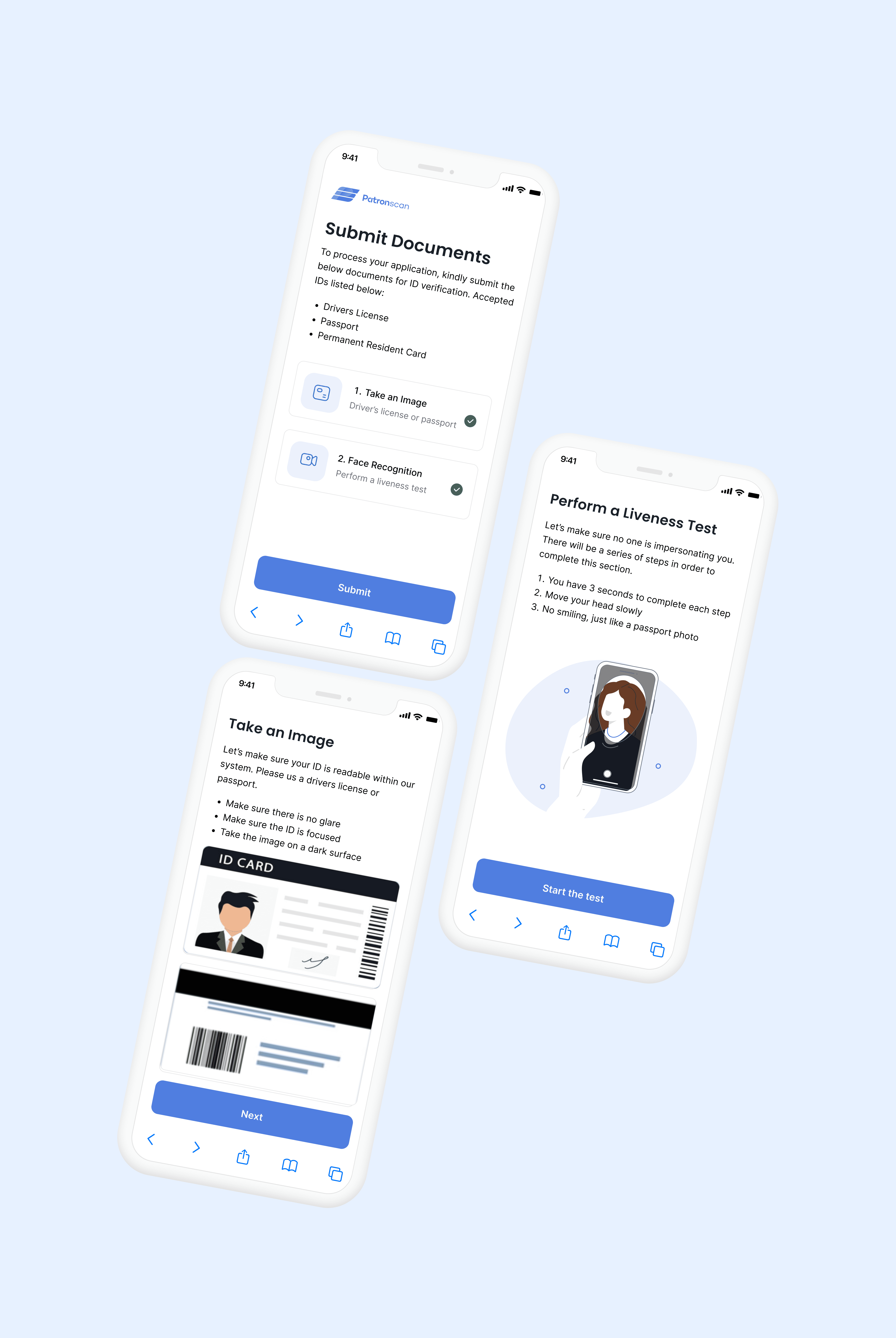
I created wireframes, user flows, blueprints, and functional prototypes to validate the verification journey before development began.
Working closely with engineering throughout the process allowed us to identify technical constraints early and avoid costly redesigns later.
First Iteration
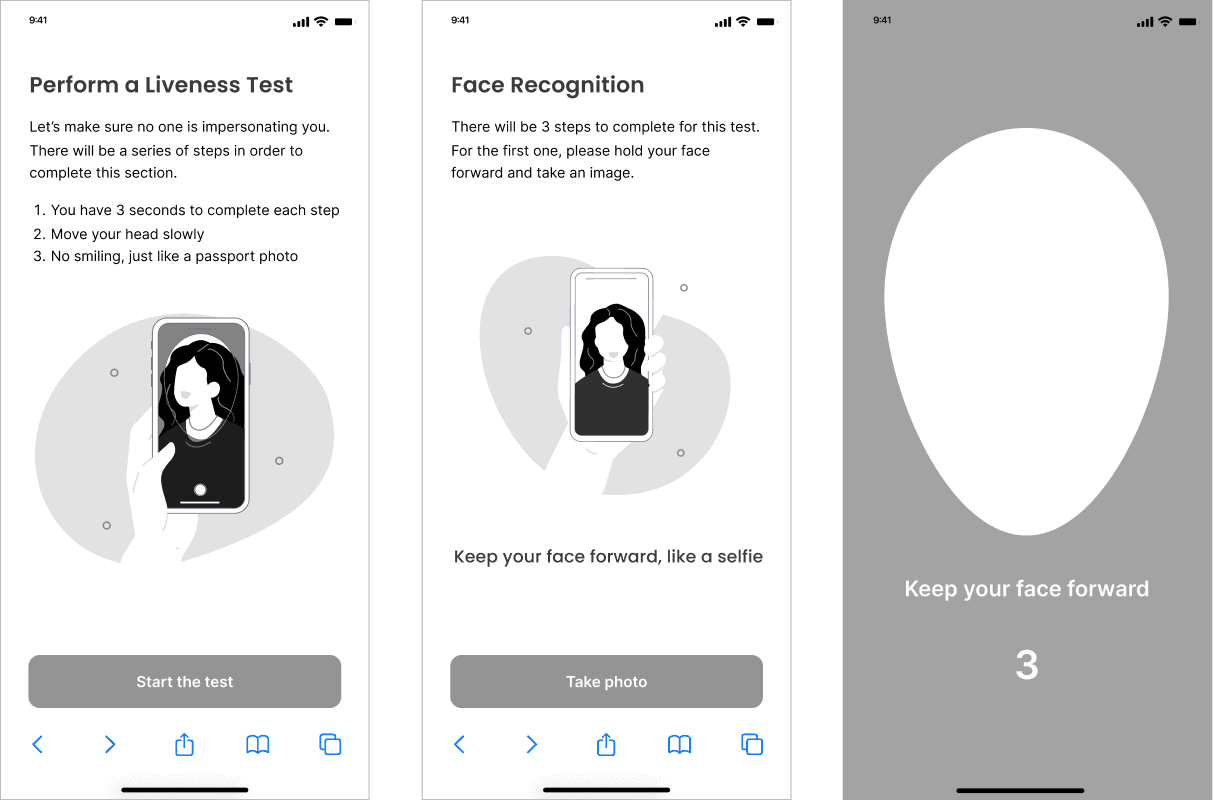
Our initial concept included custom facial guidance overlays that would help users position their faces correctly during verification.
The goal was to:
Improve image quality
Reduce verification failures
Increase completion rates
Technical Constraints
During implementation planning, we identified significant development complexity associated with building a custom facial guidance system.
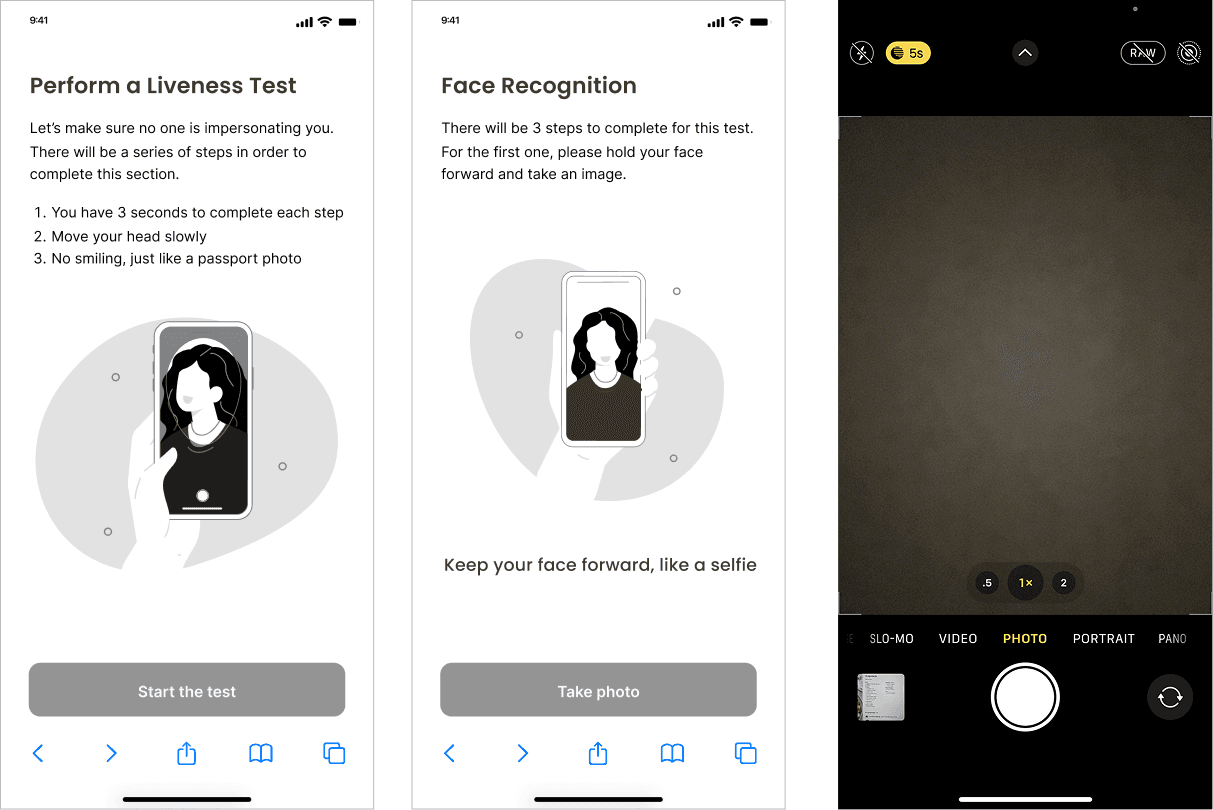
After evaluating effort versus impact, we pivoted to a solution that leveraged native iOS and Android camera experiences.
This decision allowed us to:
Reduce development time
Maintain verification accuracy
Deliver a faster path to market
Second Iteration
The revised experience focused on:
Native camera interactions
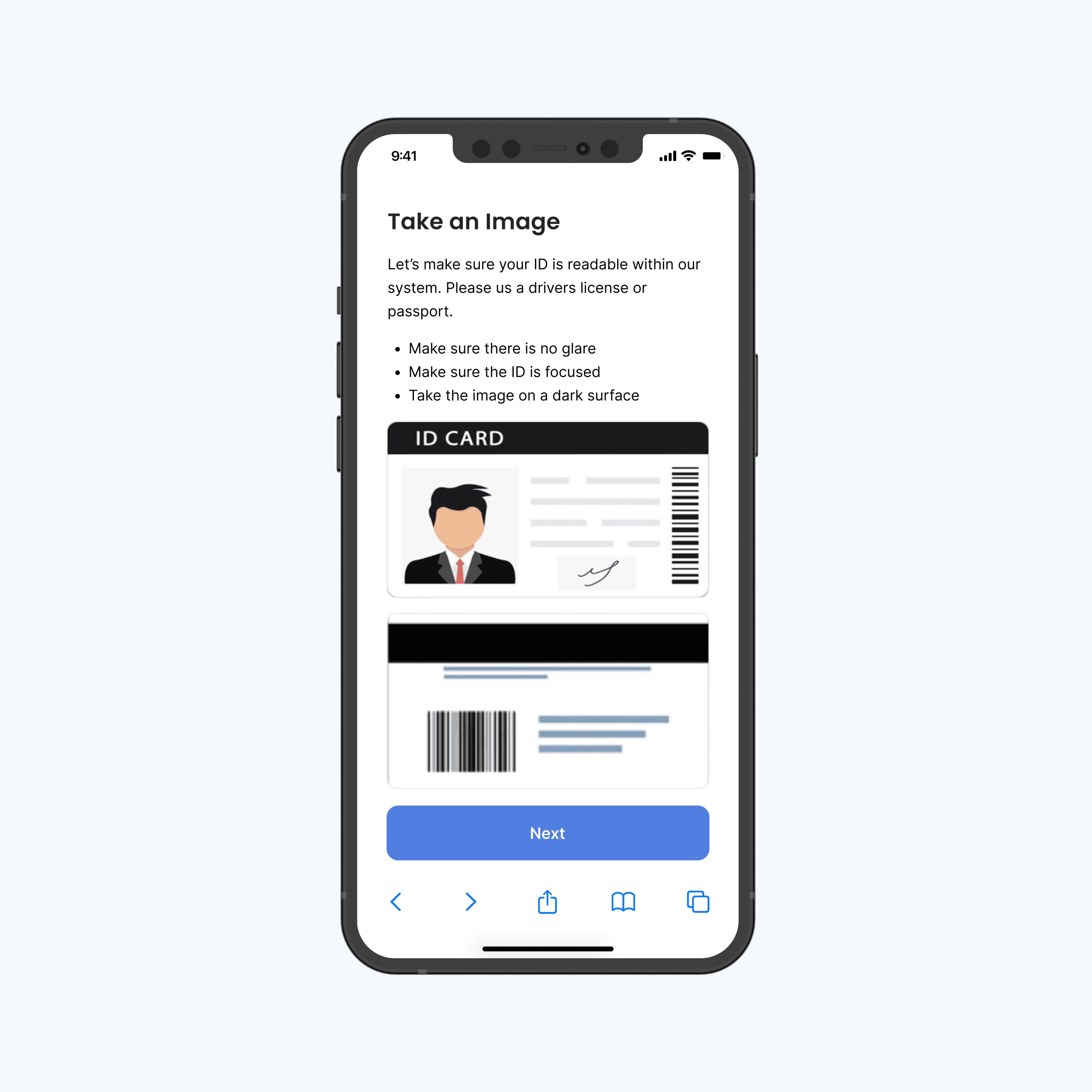
Clear instructional guidance
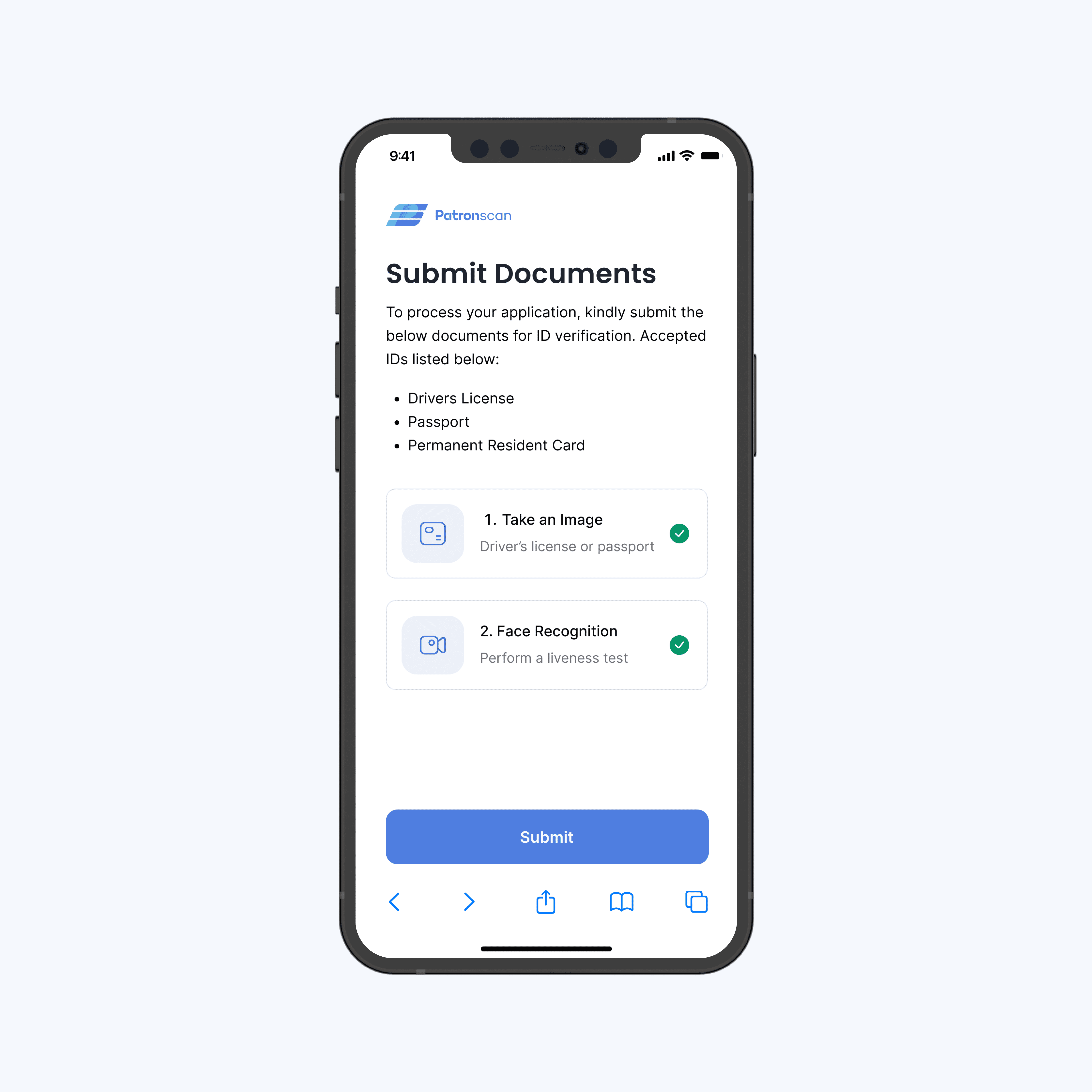
Simplified verification steps
Reduced cognitive load
The result was a more streamlined and scalable verification flow while still meeting business and security requirements.